
The #1 Most Popular Christmas Dish & Drink in All 20 Latino Countries
- November 2024
- By Lorena Santamaria
- Recipe from Everywhere Latino

Can you guess the top Nochebuena culinary tradition in each Hispanic homeland?
Christmas Latino-style typically means celebrating the holidays with as many family members as you can squeeze into your home. There is usually lots of cooking. That’s because each of the 20 Spanish-speaking countries in Latin America and the Caribbean has its own festive dish and drink uniquely associated with the season of Navidad.
Whether these culinary tesoros reflect the culinary heritage of Indigenous ancestors, Spanish conquistadors, or later-arriving communities from other lands, they bring the joy of Christmas. Gathering around the Nochebuena feast reminds us we are home — no matter where we come from or live today.
It’s also why every December 24, tables at Nochebuena celebrations across the U.S. look a little different from each other. How diferente? Take a journey with us as we celebrate holiday feasting at its most authentic and delicioso in this Familia Kitchen Guide to the #1 Most Popular Christmas Dish & Drink in All 20 Latino Countries.

Argentina — Vitel Toné
Argentinians celebrate the holidays with a dish that comes from Italy. From the late 1800s to the early 1920s, wave after wave of Italian immigrants came to Argentina, and those from the Piedmont region brought with them vitello tonnato. Argentinians made it their own and crowned it Christmas-worthy: Vitel toné is a celebratory dish made with sliced veal, capers, and a creamy tuna sauce.
Are you wondering how the tuna snuck in there? The dish’s originators came from Piedmont in northwest Italy, a hub for canned tuna, oil and capers. Adopting this culinary tradition wholeheartedly, Argentinians kept the tuna, despite their known love of beef. And while the traditional Argentinian asado is a way of life, vitel toné works well for feeding a large extended family for the holidays without having to prepare a full outdoor parilla in the peak heat of their summer months.

Belize — Black Fruit Cake
Breaking the U.S. stereotype of stale holiday fruit cakes is Belize’s much-loved rich, rum-soaked black fruit cake. The cake is an evolution of a traditional English pudding, which British colonizers brought to the Caribbean as early as the 17th century.
Belizeans have made it their own, adding burnt sugar syrup and local stout to the batter to give the cake its distinct dark color. Dried fruits like raisins, cherries and tropical fruits are soaked in rum for weeks, even months ahead of the holiday so the cake packs a punch of boozy flavor.
We tried to limit ourselves to just one dish per country, but we can’t leave out tamales. As with so many other Latino countries, they also play a defining role in Belize’s holiday celebrations. Belizean-style tamales, better known as bollos, are steamed in a plantain leaf, filled with chicken and pork, and made with col, a traditional red sauce.

Bolivia — Picana
In Bolivia, picana, a hearty stew, takes center place on tables during the holidays, especially Christmas Eve. The soup generally includes multiple meats such as lamb, beef, pork and chicken, as well as various vegetables and even wine and beer. The slow-simmered soup is eaten at midnight on Nochebuena, after families have attended Mass and exchanged gifts.
Recipes and ingredients for picana are heavily tied to each region of Bolivia, according to where it is being made. Since the soup is made for Christmas celebrations, its ingredients were historically dependent on harvests. For example, corn and squash might be included, where they are in season.

Chile — Cola de Mono
Similar to Argentina, known for its asados, Chileans also share in the tradition of gathering around a large barbecue for special occasions. The main difference between holiday asados in Argentina and those in Chile are the preparation and cut of meats used. While Argentinian asados highlight beef and pork cuts, Chilean asados include chicken and lamb.
Alongside the delicious cuts of meat, Chileans also enjoy a holiday cocktail called cola de mono. Cola de mono is a cold beverage consisting of coffee, milk, spices like nutmeg or cinnamon, and aguardiente. The story goes that former Chilean president Pedro Montt (in office from 1906 to 1910) was trying to leave a fiesta, but partygoers stole his pistol and spiked his coffee with aguardiente to keep the fun going. The spiked concoction was called “colt de Montt” but eventually evolved into cola de mono. (Which means monkey tail: fun!)

Colombia — Natilla
Colombians are renowned for this sweet Nochebuena tradition. The nation’s seasonal dessert of choice for the holidays is natilla. This is a custard-based postre made with cinnamon, cornstarch, milk, and panela (unrefined cane sugar, also called piloncillo).
This dulce Christmas treat is said to have come from nuns in Spain. It was brought to Colombia by the conquistadors during the Spanish Inquisition. Colombians like to add coconut, caramel, lemon, raisins, prunes and/or chocolate to their natilla and serve it alongside buñuelos.

Costa Rica — Tamal
Tamales are the MVP holiday dish across many Latin American countries, but of course each país has its own take on the wrapped-masa dish. In Costa Rica, the tamal is filled with pork shoulder or chicken, masa harina, carrot sticks, potatoes, onions, red bell peppers, green peas and green olives. It is then wrapped in a banana leaf, tied with twine, and boiled until all the flavors meld together.
Tamales were first made by our Indigenous ancestors honor to the Sun God, but when the conquistadors arrived with their own religious agenda, tamales eventually became a food to celebrate Catholicism’s Immaculate Conception and Christmas. Centuries later, Costa Ricans still serve tamales, serving them in pairs called piña de tamales. A whopping 196 million are estimated to be devoured in the country every December. That’s three tamales per person per day all month long: Impressive.

Cuba — Lechón Asado
The main event of any Cuban Christmas is lechón served with congri, aka moros y cristianos, aka Cuban rice and beans. Traditonally, lechón refers to a whole pig, perfect to feed everyone in large families. More manageably for homecooks, lechón is also a pork shoulder that is marinated overnight in a mojo sauce then roasted for hours until it’s crispy and practically falling apart. This pork cut is also known as pernil in many Latino countries (and equally loved in Puerto Rico and Dominican Republic).
The lechón asado is traditionally roasted using a caja china or Chinese box. The roaster’s name is said to derive from the 1800s when Chinese immigrants started arriving in Cuba. These Chinese laborers used makeshift wooden boxes and built fires on top to perfectly roast an entire pig. However, some experts argue that the “Chinese” label is actually a slang term meant to refer to the box as unusual or clever. In either case, using a caja china yields delicious results. It’s just not Christmas for most Cubans we know if there’s no lechón en la mesa.

Dominican Republic — Telera
On Nochebuena, telera is the bread Dominicans serve alongside other side dishes like moro de guandules or pigeon peas and rice. Telera bread is typically made using lard, yeast, anise, and a large amount of eggs, which gives the bread its yellowish color. When baked, the long bread loaf forms a light crust on the outside.
This bread is enjoyed on Nochebuena as a symbol of loved ones breaking bread together, but it is also eaten the day after with leftovers. The bread is used to soak up juices from the Christmas Eve roasted pork pernil or grilled to serve as toasty ends of a reheated leftovers sandwich. Mmm.

Ecuador — Canelazo
Unlike many areas of Latin America in the southern hemisphere where the holidays come with hot weather, the Andean highlands of Ecuador do get pretty chilly around Christmas time. For this reason, Ecuadorians enjoy a hot cup of canelazo for their Christmas gatherings. Canelazo is a cocktail usually made of hot water, cinnamon, grated panela (unrefined sugar cane, also known as piloncillo), and aguardiente.
Street vendors will often add juice and aromatics like cloves as the mixture begins to thicken. This drink is enjoyed after the main holiday meal of humitas. Humitas are somewhat similar to tamales and vary by region, but they are generally made of ground corn, onions, eggs, and spices, and are steamed in a corn husk. Some might even have cheese in them, depending on the family recipe.

El Salvador — Panes con Pavo
In El Salvador, turkey aka pavo is the main event of any holiday feast. The bird is roasted and coated in a salsa made from vegetables (pickled and fresh), as well as pumpkin seeds, nuts and turkey giblets. This keeps the meat moist as it cooks, and that same salsa accompanies the dish when the turkey is ready to serve.
The pavo is also often used to make panes con pavo, a stuffed bread or sandwich with dark turkey meat. Historically, the use of pavo for celebration meals dates back to the Aztecs and other Central American peoples who domesticated turkeys before the conquistadors arrived.

Guatemala — Banana-Leaf Tamales
The history of tamales in Latin American countries dates all the way back to the Indigenous people of Mesoamerica. While each country makes their masa-filled meal a little differently, they all share in this ancient tradition. In fact, a mural in a temple in Guatemala dates to 200 B.C., and shows what historians considered one of the first images of tamales. It’s very possible the country was the birthplace of tamales.
Guatemalan tamales, enjoyed during the holidays as the main dish, are typically made of masa, protein like chicken or pork, diced vegetables like onion, bell pepper or tomatoes, and a recado sauce. The sauce and the banana leaf that wraps all these ingredients together are part of what sets Guatemalan tamales apart from other countries’ varieties.

Honduras — Nacatamales
In Honduras, the tradition of tamales on Nochebuena continues but are instead called nacatamales. The nacatamal is made with masa around a meat filling, and uses banana leaves to wrap and steam. However, ingredients like rice, vegetables, and olives are the more unique inclusions you probably won’t find in other countries’ tamales. Nacatamales are also typically larger than the average corn husk-wrapped Mexican tamal.

Mexico — Tamales
Tamales are such a defining and globally famous holiday food in Mexico they almost don’t need to be explained. (Though we have written a few thousand palabras here.) Few words can describe the joy that gathering around corn husk-wrapped and steamed tamales means to Mexicans every Nochebuena.
For many families, the actual production of tamales in a big tamalada party in the kitchen is the biggest part of why they are so beloved. Combining masa de harina and other traditional ingredients together and wrapping each by hand sets the stage for a beautiful holiday, with even the littlest kids playing a role. Whether filled with pork, chicken, rajas (chiles and cheese), or guava and cheese ones for dessert, Mexicans take pride and great care in the preparation and enjoyment of tamales every Nochebuena.

Nicaragua — Nacatamales + Gallina Rellena
Nicaragua is yet another Latino nation that loves its tamales. Every Christmas, most families make dozens of large, banana leaf-wrapped nacatamales for Nochebuena celebrations.
We would be remiss if we didn’t mention Nicaragua’s just-as-loved other holiday main course: gallina rellena. This tasty dish is a stuffed whole chicken with one of two different fillings. In the Northern part of Nicaragua, the filling is made with a sauteed mixture of pork, bread crumbs, chayote squash, cola, sour oranges, Worcestershire sauce and other spices. This filling has the texture of a paste. In the Southern areas, the filling includes pork, carrots, capers, raisins, ketchup, mustard, onions, olives and potatoes. Both are delicioso.

Panama — Chicken Tamales
The tamal tradition for the holidays continues in Panama. Here, the tamales are also made with corn masa and wrapped in banana leaves, but there are a few signature ingredients that differentiate a Panamanian tamal.
For one, Panamanians tend to use chicken more than pork as the primary protein, and broth is added to the masa, making it more wet than others. Plus, Panamanians add raisins to their tamale filling to sweeten the meal. Served alongside the feast of tamales is arroz con gandu or rice with pigeon peas and coconut (similar to other Latino countries’ arroz con gandules). One more holiday essential is a chilled glass of ron ponche, Panama’s answer to eggnog. Ron ponche is a spiced creamy drink made with dark rum, milk, eggs, cinnamon and nutmeg. It’s the perfect way to toast the season like a Panameño.

Paraguay — Chipa
Chipa, a mixture of cassava starch, cheese, eggs and fat, is the unofficial bread of the week leading up to Christmas in Paraguay. During the lead-up to Christmas, or Semana Santa, Catholics abstain from eating meat, which is part of the reason filling Chipa is so popular around this time.
The Indigenous people of the region were making chipa long before colonizers showed up, but when they did, they brought with them the addition of cheese, eggs, and Catholic tradition to attach to the food. Alongside chipa, Paraguayans also serve sopa paraguaya, which is a custardy cornbread. The dish is made from cornmeal, onion, cheese, milk and eggs, once again not including meat in respect of the Semana Santa holy restriction on carne.

Peru — Panetón
Peru’s Christmas feast stars tamales criollos, roast pork, and rice. However, the unexpectedly beloved star of a Peruvian Nochebuena meal is panetón. The dessert actually originates from Italy where it’s called panettone, but the people of Peru have of course put their own local spin on the sweet bread over the years.
In Peru, panetón is dome-shaped and light in texture. The sweet bread is made with raisins, dried and candied fruit as well as spices. The addition of papaya, native to Peru, is key to how this version is different from the original Italian panettone. Some might consider the bread un poquito on the dry side, but that’s also what makes it perfect to pair with a cup of Peruvian hot chocolate.

Puerto Rico — Coquito
In Puerto Rico, you can’t cheers to the holidays without a rum-spiked glass of coquito. The blender frothy drink typically contains coconut milk, coconut cream, rum, sugar, nutmeg and/or cinnamon, but family recipes will always vary.
The drink is similar to eggnog, if eggnog had coconut in it. Its exact origins are hard to pinpoint. In one coquito camp, some believe Spanish conquistadors brought a version of eggnog, which Puerto Ricans adapted by adding locally available coconut milk and rum. Others believe that coquito started with the native Taino people of Puerto Rico. Regardless of its origin, coquito is esencial to a Puerto Rican holiday celebration, along with it’s version of tamales, banana-leaf wrapped pasteles, and a delicious serving of arroz con gandules. Every family makes theirs differently, of course. You can find many recipes for coquito, all delicioso and festive, here.

Uruguay — Asado
Like Argentina and Chile, in Uruguay, the holidays are celebrated with a big asado with family and friends. Some families might reserve a pig or lamb to roast for the occasion, but generally, the Nochebuena feast stars beef cuts and chorizo sausages at an Uruguayan asado.
This asado is a slow, all-day process usually spearheaded by one person who oversees the grill for the day. There are no heavy sauces or marinades rubbed into the meat, as the tradition is to let the flavor of the meat itself shine through.

Venezuela — Pan de Jamón
Pan de jamón rules the Venezuelan Christmas dinner table. The festive loaf is made with yeast, flour, eggs, and sugar. The dough is shaped into a flat square or rectangle and layered with slices of ham, Manzanillo olives, and sweet raisins. Then, the dough and other ingredients are rolled and baked. Let the feasting begin! This iconic pan is said to have been invented in 1905 at a bakery in Caracas. The bakery’s owner made it with leftover holiday ham. It quickly became popular in the bakery and was eventually commercialized.
Pan de jamón has company on the Christmas table. It is just one of the four stars in the quartet of the foods traditionally served in a traditional Venezuelan fiesta Navideña. The other three you’ll find on the Venezuelan Christmas plate are hallacas (the country’s tamales), pernil and chicken salad.
That’s a wrap in our Familia Kitchen Nochebuena roundup of the most popular holiday dishes and drinks in all 20 Spanish-speaking Latino countries. Did we miss your favorite? Drop us a message and let us know so we can include your vote for best Navidad meal. If you have a delicioso family recipe to share, even better. We’d love to celebrate your Christmas Eve must-have traditional festive dishes and drinks.
¡Féliz Navidad y buen provecho this and every Nochebuena and holiday season to all!
Find more family-famous Latino Christmas and holiday recipes at FamiliaKitchen.com
MoreLike This
More Delicioso Family Recipes & Articles We Think You’ll Like!


You May Also Like
Latino Desserts Guide: Top 20 Postres in Latin America
- September 2026
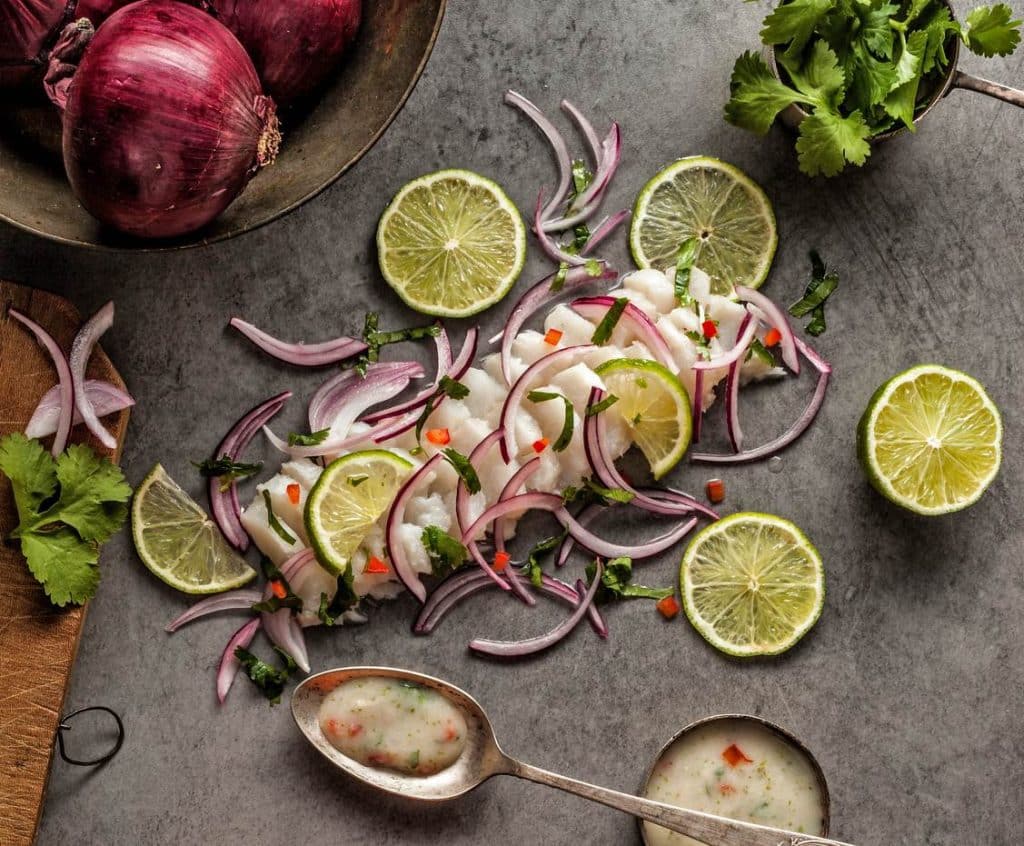
Ceviche, Peru’s Star Starter: History & Ingredients
- March 2025
- From Everywhere Latino

How Are Arepas, Pupusas & Empanadas Different?
- March 2025
- From Everywhere Latino
 EN
EN  ES
ES
Got a question or suggestion?
Please rate this recipe and leave any tips, substitutions, or Qs you have!